Performance Edge Physical Therapy

Hip Pain & Stiffness
HIP PAIN & STIFFNESS PHYSICAL THERAPY • LIVONIA, MI

Hip Pain Shouldn’t Keep You From Moving With Confidence.
If hip pain or stiffness is making it harder to walk, use stairs, exercise, golf, get in and out of the car, or keep up with everyday life, the first step is understanding what may be getting in the way.
Performance Edge provides one-on-one physical therapy for hip pain and stiffness in Livonia, MI. We help active adults build a plan around what they want to get back to—not just where their hip hurts.
Does This Sound Familiar?
You may not know exactly what’s causing your hip symptoms—you just know they’re starting to change what you can do.
- Your hip feels stiff when you first get up or after sitting for a while.
- Walking, stairs, squatting, or getting in and out of the car has become uncomfortable.
- You notice pain in the groin, side of the hip, buttock, or upper thigh.
- Sleeping on one side has become uncomfortable.
- Exercise, golf, running, pickleball, or other activities are harder than they used to be.
- You’ve started avoiding certain movements because you’re worried about making your hip worse.
You don’t need to figure out the diagnosis on your own. A physical therapy evaluation can help determine what needs attention and what the right next step may be.
Where Can Hip Pain Be Felt?
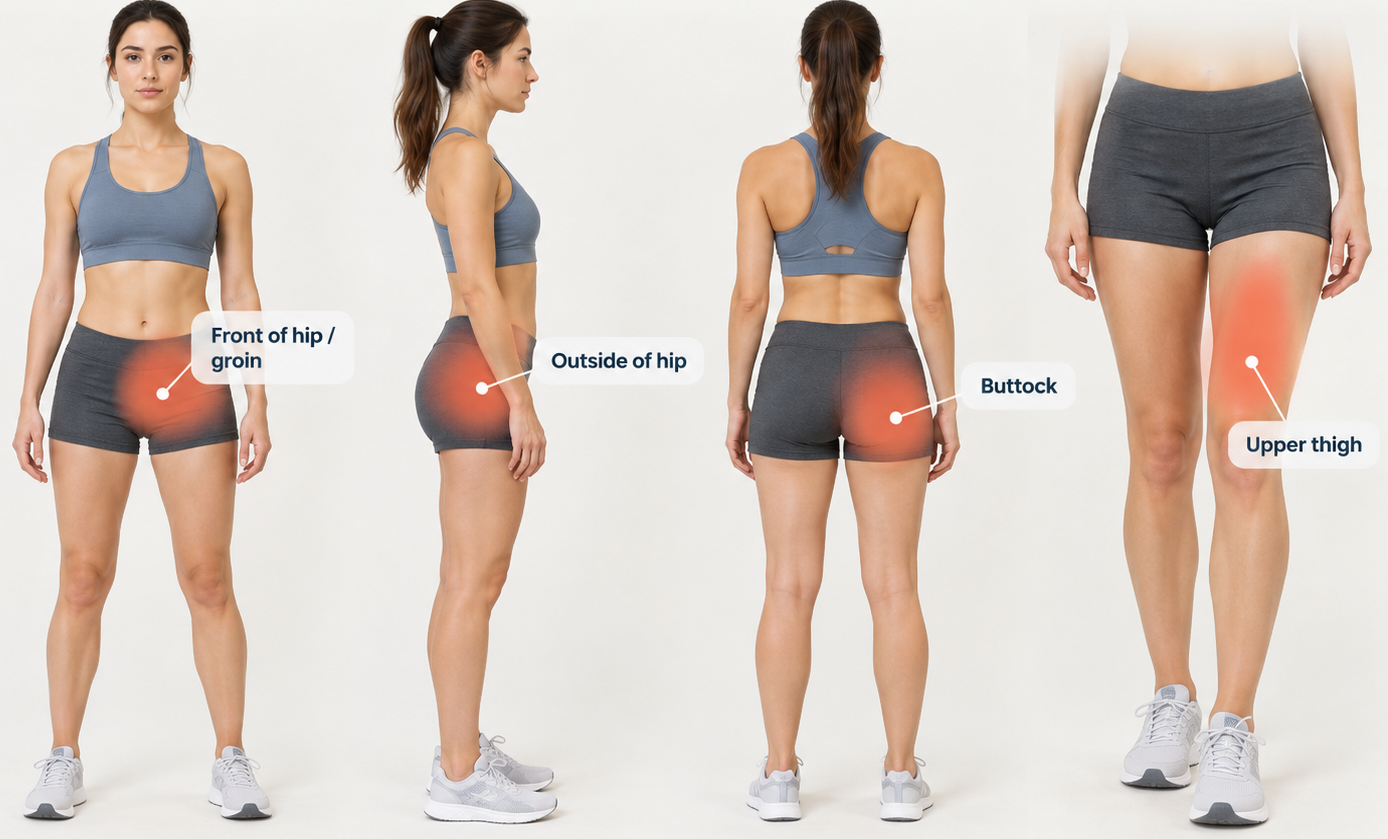
Hip pain can show up in more than one place.
Some people notice pain toward the front of the hip or groin. Others feel discomfort along the outside of the hip, around the buttock, or into the upper thigh.
Symptoms may be influenced by the hip joint, muscles, tendons, surrounding tissues, changes related to arthritis, previous injuries, activity demands, or sometimes the lower back.
Where It Hurts Is Only Part of the Picture
Pain location gives us useful information, but it doesn’t automatically tell us exactly what treatment you need.
That’s why we also look at how your hip moves, your strength, balance, walking, everyday movements, what makes your symptoms better or worse, and what you need your body to be able to do.
Why Does My Hip Hurt or Feel Stiff?
There isn’t one explanation for every episode of hip pain.
Symptoms may begin after a change in exercise, sports, work, or everyday activity. Other times, hip pain or stiffness develops gradually.
Strength, mobility, joint changes, tendon irritation, previous injuries, and how much activity your hip is currently prepared to handle may all play a role.
That’s Why Your Hip Evaluation Matters
Rather than choosing exercises based only on where you hurt or what an imaging report says, we look at how your hip actually moves and performs.
Your evaluation may include your walking, stairs, balance, squat or step mechanics, hip strength, and how your lower back, knee, and ankle may be contributing.
Most importantly, we consider what you want to get back to so your plan is built around your actual goals.
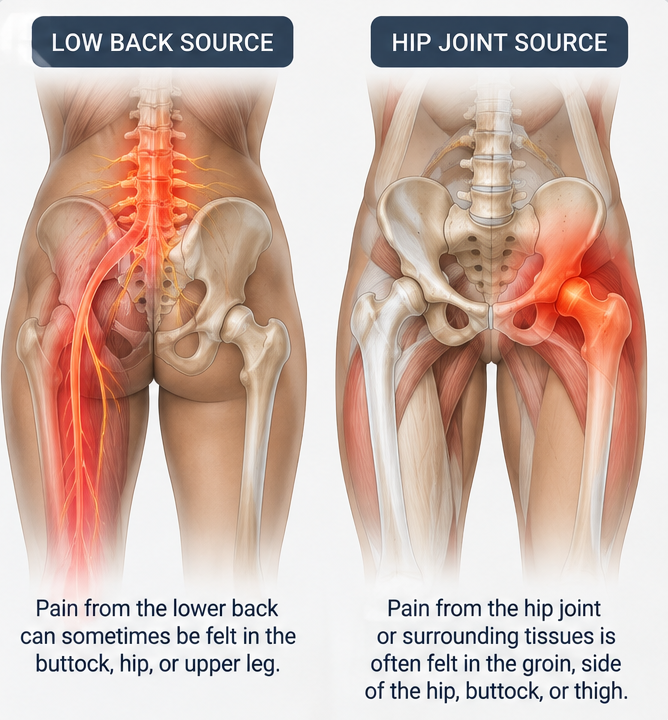
Can Hip Pain Come From My Lower Back?
Yes. Sometimes symptoms from the lower back can be felt around the buttock, hip, or upper leg.
Other times, the hip itself may be contributing more directly to the problem.
That’s why pain location alone doesn’t always give you the answer.
During your evaluation, we look at how your symptoms behave and how both your hip and lower back move to help determine what deserves attention.
Not sure whether your symptoms are coming from your hip or back? You don’t have to figure that out before reaching out.
Do I Need an X-Ray or MRI for Hip Pain Before Physical Therapy?
Not always. Many people with hip pain or stiffness can first be evaluated through their health history and a physical examination.
Imaging may be appropriate when there has been a significant injury, when certain conditions are suspected, or when the examination suggests that further medical evaluation would be helpful.
If we identify something during your evaluation that should be looked at by another healthcare provider, we’ll help you understand the appropriate next step.
How Physical Therapy Can Help
Your plan shouldn’t start with a generic list of “hip exercises.”
We start by learning what you’re experiencing, which activities have become difficult, and what you want to be able to do again. From there, we look at your movement, strength, balance, tolerance, and other factors that may be limiting you.
1
Assess
Understand what’s getting in the way, see where you’re starting, and identify what needs attention first.
2
Rebuild
Work on the strength, movement, and control you need to move forward.
3
Perform
Prepare your body for the real demands of the activities you want to get back to.
What Progress Can Look Like
Progress looks different for everyone. The goal is not simply to make your back feel better for an hour—it’s to help you become more capable in the things that matter to you.
Move With More Confidence
Feel less hesitant about walking, stairs, bending, getting up from a chair, or exercising.
Build Hip & Leg Strength
Improve strength so your body is better prepared for walking, exercise, sports, and everyday activity.
Know What to Do
Understand how to manage your hip, adjust activity when needed, and continue building after physical therapy.
Return to What You Enjoy
Work toward the gym, golf, running, pickleball, travel, recreational sports, yard work, or other meaningful activities.
When Hip Pain Needs More Urgent Medical Attention
Most hip pain does not require emergency care, but some symptoms should be evaluated promptly.
Seek medical attention if you have severe hip pain after a fall or major injury, cannot put weight through the leg, notice an obvious change in the shape or position of the hip or leg, or develop rapidly increasing swelling.
A hip or joint that becomes very red, hot, and swollen—especially along with fever—also deserves prompt medical evaluation.
If you’re unsure whether physical therapy is the appropriate place to start, contact your physician or another qualified healthcare professional.
Frequently Asked Questions
Yes. Physical therapy can help many people improve hip strength, movement, balance, and their ability to perform activities that have become difficult.
Your plan will depend on what we find during the evaluation, how your symptoms behave, and what you want to get back to doing.
Often, yes.
Having arthritis does not automatically mean you need to stop exercising or being active. Strength and movement can be important parts of maintaining function and staying active.
The type and amount of exercise may need to be adjusted based on your symptoms, current ability, and goals.
Pain along the outside of the hip can sometimes involve the muscles, tendons, or other tissues around that area.
However, different problems can produce similar symptoms, so pain location alone doesn’t tell us exactly what treatment you need.
An evaluation can help determine what movements, strength deficits, or activity demands may be contributing.
Hip pain with walking can happen for several reasons. The hip joint, muscles, tendons, strength, mobility, and even the lower back can all influence how comfortable walking feels.
Sometimes pain develops because the hip is being asked to handle more activity than it is currently prepared for. Other times, stiffness, weakness, arthritis, or irritation of the tissues around the hip may contribute.
A physical therapy evaluation can help determine what may be limiting your walking and what needs attention.
Hip pain can sometimes feel worse at night because of your sleeping position, pressure on the painful side, or irritation of the tissues around the hip.
For some people, symptoms are also more noticeable at night simply because there are fewer distractions than during the day.
Changing positions or using pillows for support may help, but persistent or worsening night pain should be discussed with a healthcare professional—especially if it occurs along with other concerning symptoms.
Staying in one position for a long time can make the hip feel stiff or uncomfortable, especially if the joint or surrounding tissues are already irritated.
You may notice discomfort when you first stand up, take your first few steps, or try to straighten the hip after sitting.
If this happens frequently, an evaluation can help determine whether strength, mobility, activity tolerance, or another factor may be contributing.
Consider seeing a physical therapist when hip pain or stiffness keeps returning, lasts longer than expected, or starts changing how you walk, exercise, sleep, use stairs, or participate in activities you enjoy.
You also don’t need to wait until the pain becomes severe. If you’re starting to avoid activities or aren’t sure how to safely get back to them, an evaluation can help you understand what may be getting in the way and what to do next.
If your symptoms followed a major injury, you cannot put weight through the leg, or you have other concerning symptoms, medical evaluation may be appropriate before starting physical therapy.
There isn’t one timeline that applies to everyone.
How quickly you improve can depend on what is contributing to your symptoms, how long you’ve been dealing with them, your current strength and activity level, and what you’re trying to return to.
Rather than assuming everyone needs the same number of visits, we establish a starting point and use regular progress checks to see what is improving and whether your plan needs to change.
Your evaluation starts with a conversation about your symptoms, goals, and the activities that have become difficult.
We’ll then look at things such as your hip movement, strength, walking, balance, and movements like squatting, stepping, or getting up from a chair when appropriate.
We may also look at your lower back, knee, or ankle if they could be contributing.
From there, we’ll explain what we find, establish a starting point, and create a plan around what you want to get back to doing.
Reviewed by Dr. Mishka Spencer, PT, DPT
Performance Edge Physical Therapy • Livonia, MI
Last reviewed: October 2026
Not Sure What’s Causing Your Hip Pain or Stiffness?
You don’t need to diagnose yourself before reaching out.
Tell us what you’ve been experiencing and what you want to get back to, and we’ll help you determine whether physical therapy may be the right next step.
One-on-one physical therapy in Livonia, Michigan.