Performance Edge Physical Therapy

Back Pain & Sciatica
BACK PAIN & SCIATICA PHYSICAL THERAPY • LIVONIA, MI
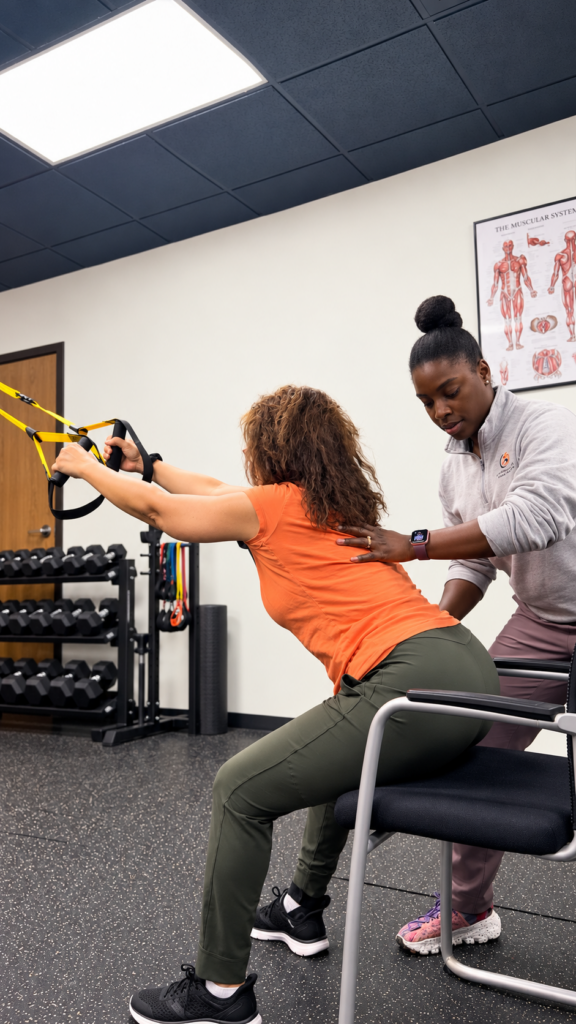
Back Pain Shouldn’t Decide What You Can Do.
If back pain—or pain, tingling, or numbness traveling into your leg—is making it harder to walk, exercise, golf, work, travel, or move with confidence, the first step is understanding what may be getting in the way.
At Performance Edge, we help active adults in Livonia, MI build a plan around what they want to get back to—not just where they hurt.
Does This Sound Familiar?
You may not know exactly what’s causing your symptoms—you just know they’re starting to change what you can do.
- Your back feels stiff or sore after sitting, standing, lifting, exercise, or golf.
- Pain keeps coming back whenever you try to become more active.
- You feel pain traveling into your buttock or down one leg.
- You’ve noticed tingling, numbness, or weakness in the leg or foot.
- You’re avoiding workouts, travel, yard work, sports, or everyday activities because you’re worried about making things worse.
You don’t need to figure out the diagnosis on your own. A physical therapy evaluation can help determine what needs attention and what the right next step may be.
Back Pain vs. Sciatica
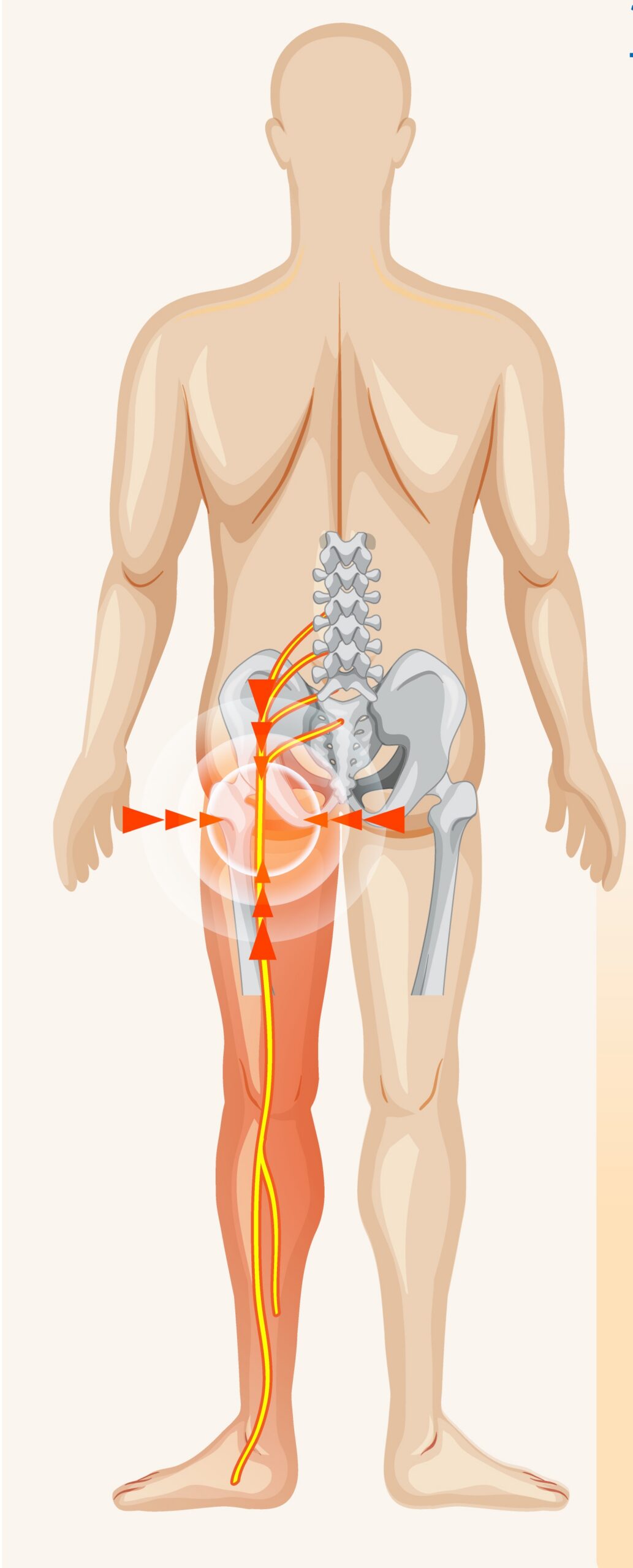
Back Pain and Sciatica Aren’t the Same Thing
Back pain may stay around the lower back, or it may sometimes be felt around the hips or buttocks.
Sciatica describes symptoms related to irritation or pressure affecting the sciatic nerve or the nerve roots that contribute to it. Symptoms can include pain, tingling, numbness, or weakness that travels from the lower back or buttock into the leg and sometimes as far as the foot.
The important part is that similar symptoms can happen for different reasons. That’s why simply knowing where you hurt doesn’t always tell us what your treatment should look like.
Your Symptoms Can Have More Than One Contributor
That’s why we look at how your symptoms behave, what movements or activities are difficult, your strength and movement, and what you need your body to be able to do.
Sources: MedlinePlus
Why Does My Back Hurt?
There isn’t one explanation for every episode of back pain. Symptoms may be influenced by muscles, joints, discs, nerves, changes in the spine, recent activity, repetitive loading, or a combination of factors.
Sciatica may also be associated with irritation around a spinal nerve, but symptoms and treatment can vary from person to person.
That’s why your evaluation matters.
Rather than choosing exercises based only on a diagnosis or MRI report, we look at how you move, what makes your symptoms better or worse, your strength, your activity demands, and what you’re trying to get back to.
Do I Need an MRI Before Starting Physical Therapy?
Not necessarily. Many people with back pain or sciatica can first be evaluated through their health history and a physical examination. Imaging may be appropriate when symptoms are severe, persistent, or when the examination suggests that further medical evaluation is needed.
If we identify something during your evaluation that should be looked at by another healthcare provider, we’ll help you understand the appropriate next step.
How Physical Therapy Can Help
Your plan shouldn’t start with a generic list of “back exercises.”
We start by learning what you’re experiencing, what activities have become difficult, and what you want to be able to do again. From there, we look at the movement, strength, tolerance, and other factors that may be limiting you.
1
Assess
Understand what’s getting in the way, see where you’re starting, and identify what needs attention first.
2
Rebuild
Work on the strength, movement, and control you need to move forward.
3
Perform
Prepare your body for the real demands of the activities you want to get back to.
What Progress Can Look Like
Progress looks different for everyone. The goal is not simply to make your back feel better for an hour—it’s to help you become more capable in the things that matter to you.
Move With More Confidence
Feel less hesitant about bending, lifting, walking, or exercising.
Build Strength
Improve your ability to handle the demands of everyday life and activity.
Know What to Do
Understand how to manage your body and what to do if symptoms begin to flare again.
Return to What You Enjoy
Work toward the gym, golf, travel, recreational sports, yard work, or other meaningful activities.
When Back Pain Needs More Urgent Medical Attention
Most back pain is not caused by a serious medical problem, but some symptoms should be evaluated urgently.
Seek urgent medical care if back pain is accompanied by new loss of bladder or bowel control, numbness around the groin or genital area, rapidly worsening weakness or numbness in both legs, or serious symptoms following major trauma. Fever, unexplained weight loss, or other significant changes along with back pain should also be discussed with a medical provider.
Sources: ChoosePT; Cambridge University Hospitals
Frequently Asked Questions
Yes. Physical therapy can often help people with sciatica improve movement, build strength, and gradually return to activities that have become difficult. Your plan will depend on how your symptoms behave, what movements aggravate or relieve them, your strength and mobility, and what you want to get back to doing.
A short period of taking it easier may be helpful when symptoms are irritated, but prolonged bed rest is usually not the goal. In many cases, staying appropriately active and gradually returning to normal movement is more helpful than avoiding activity altogether. Your physical therapist can help you decide what to modify and what is safe to keep doing.
Often, yes—but the type and amount of exercise may need to be adjusted based on your symptoms. The goal is not to push through significant pain or ignore worsening nerve symptoms. A physical therapy evaluation can help identify which movements are appropriate now and how to gradually build back toward your usual workouts and activities.
There is no single timeline that applies to everyone. Recovery can depend on how long you have had symptoms, whether pain is traveling into the leg, your activity level, strength, overall health, and what you are trying to return to. At Performance Edge, we use regular progress checks rather than assuming everyone needs the same number of visits.
Your evaluation starts with a conversation about your symptoms, goals, and the activities that have become difficult. We’ll then look at your movement, strength, mobility, and other factors that may be contributing to the problem. From there, we’ll explain what we find, establish a starting point, and create a plan based on what you want to get back to doing.
Reviewed by Dr. Mishka Spencer, PT, DPT
Performance Edge Physical Therapy • Livonia, MI
Last reviewed: October 2026
Not Sure What’s Causing Your Back or Leg Pain?
You don’t need to diagnose yourself before reaching out.
Tell us what you’ve been experiencing and what you want to get back to, and we’ll help you determine whether physical therapy may be the right next step.
One-on-one physical therapy in Livonia, Michigan.