
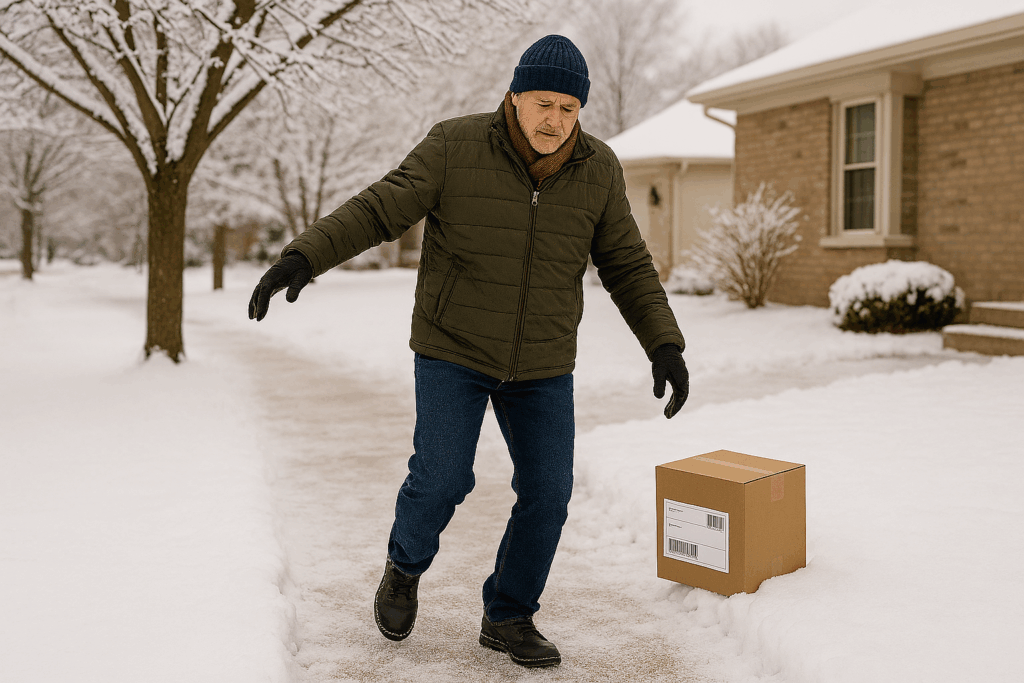
Introduction: Winter’s Hidden Dangers
Winter brings cozy nights, holiday excitement, and beautiful snowy landscapes—but it also brings a dramatic increase in slips, falls, and preventable injuries. Whether you’re a runner trying to stay active, a parent navigating icy parking lots, or someone simply looking for the mail, winter raises your risk in ways you may not even realize.
If you’ve ever searched online for a physical therapist near me after a winter fall or back strain, you’re not alone. Many people in our community don’t realize how common cold-weather injuries are until they’re suddenly dealing with a painful setback.
At Performance Edge Physical Therapy—your trusted physical therapy clinic in Livonia—we guide your musculoskeletal health and confident movement. With the right tools, techniques, and winter physical therapy tips, we help you stay strong, safe, and confident all winter long.
Why Winter Causes So Many Injuries
Winter injuries aren’t random; they are the result of specific environmental and physiological changes that occur when the temperature drops. To protect yourself, it helps to understand how winter impacts your body and environment. The injuries we see most often at our Livonia physical therapy clinic come from three main sources:
1. The Ice Trap (Slips and Falls)
The most obvious threat is the ground beneath your feet. Ice—especially nearly invisible “black ice”—is one of the leading causes of winter injuries. A single slip can result in:
- Wrist or arm fractures
- Shoulder dislocations
- Head injuries
- Hip fractures (a major concern for seniors)
If you’ve experienced a fall and are now looking for the best physical therapy near me, timely care is essential to avoid long-term complications.
2. Cold-Muscle constriction (Strains and Tears)
Think of a rubber band. When it is warm, it stretches easily. When it is frozen, it becomes brittle and snaps under pressure. Your muscles, tendons, and ligaments behave similarly. Cold temperatures restrict blood flow, reducing flexibility and increasing the likelihood of:
- Hamstring pulls
- Calf strains
- Lower back spasms
- Tendon irritation
This is why “muscle strain treatment” and “physical therapists near me” spike in online searches every January and February.
3. The Heavy Lift (Snow Shoveling Injuries)
Snow looks fluffy— a shovel full of wet snow can weigh over 20 lbs. Combined with repeated bending, twisting, and throwing this weight on slippery surfaces is a recipe for a snow shoveling injury, often manifesting as:
- Lower back injuries
- Herniated discs
- Rotator cuff strains
If shoveling leaves you stiff or unable to move comfortably, our physical therapy services can help restore mobility and prevent reinjury.
Your Guide: Performance Edge Physical Therapy in Livonia, MI
“Being careful” isn’t enough. Prevention requires a strategy—and that’s where we come in.
At Performance Edge Physical Therapy, we provide comprehensive injury-prevention education and hands-on care, making us one of the best physiotherapist near me options for Livonia residents. Whether it’s swollen ankle, strained back, or fractured arm or wrist—we treat all sorts of winter injuries daily. But our real mission is helping you prevent them altogether.
If you’re searching for physical therapy Livonia MI or physical therapist near me, our skilled team can create a customized winter readiness plan to keep you moving safely.
We understand the mechanics of balance. We know how to condition the core to protect the spine during shoveling. We know exactly how to warm up a cold body to prevent strains. If you are looking for some tips for a safe winter season, here is a plan that can help keep you safe this season.
The Plan: Your Winter Survival Guide
To stay safe, focus on three components: your movement, your environment, and your equipment.
Phase 1: Defy Gravity (Prevent Slips and Falls)
Gravity is unforgiving, but you can change how you interact with it.
1. Use the “Penguin Walk”
It may feel silly, but it works. Short, shuffling steps keep your center of gravity over your base of support—critical on icy surfaces.
- How to do it:
- Take short steps
- Keep hands out of pockets
- Walk flat-footed
- Lean slightly forward
- Keep your weight over your lead foot
This simple shift dramatically reduces fall risk.
2. Wear the Right Footwear
You wouldn’t run a marathon in flip-flops, then why would you navigate winter snow in any regular shoe. Think of traction as your first line of defense.
Try:
- Heavy-tread boots
- Or traction cleats like Yaktrax
3. Scan the Surface
Assume any wet or shady pavement is icy. Be particularly cautious when getting out of your vehicle; plant both feet firmly on the ground before standing up to ensure stability.
Phase 2: Shoveling Smarter (Prevent Back Injuries)
A snow shoveling injury can sideline you for weeks. Treat shoveling like a workout—because it is one.
1. Warm-Up
Never roll out of bed and go straight to the driveway. Your discs are hydrated and swollen in the morning, making them vulnerable. Walk around the house for 10 minutes, do some gentle squats, and swing your arms to get blood flowing before picking up a shovel.
2. Push, Don’t Lift
Whenever possible, push the snow to the side rather than lifting it.
3. Avoid the Lift-and-Twist
This is the #1 movement that sends people looking online for a physical therapist near me in winter.
Correct technique:
- Bend your knees
- Keep your back straight
- Lift with your legs
- Pivot your entire body instead of twisting your spine
4. Choose Better Tools
Curved-handle shovels reduce strain on your lower back.
Phase 3: Keep Your Muscles Winter-Ready
Cold weather doesn’t have to mean stiffness if you are proactive. Follow these three winter physical therapy tips to get your muscles ready for winter.
1. Do Dynamic Stretching
Avoid long, static stretches when muscles are cold. Instead, warm up your body with:
- Leg swings
- Arm circles
- Torso rotations
2. Stay Hydrated
Cold weather makes dehydration easy to overlook—leading to cramps and fatigue. Drink water before and after outdoor activities.
3. Layer Up
Wear layers that wick moisture away from your skin so you don’t get a chill when you stop moving. Warm muscles stay flexible and resist injury.
When Prevention Fails: What’s Your Next Step?
Sometimes accidents happen, and that’s when finding the best physical therapy near me becomes crucial.
If you experience pain, avoid the “wait and see” approach. Ignoring small problems can turn minor strains into chronic pain.
What to Do After a Muscle Strain
- Stop the activity
- Evaluate swelling or loss of movement
- Use ice for the first 48 hours
- Use heat afterward for stiffness
- Move gently—bed rest slows healing
However, consulting a professional is best to determine the right modality. Visit our physical therapy clinic in Livonia MI for a comprehensive evaluation and customized recovery plan.
We provide a comprehensive evaluation to determine if your pain is a simple muscle strain or something more complex, and we create a customized roadmap to get you back to 100%.
The Transformation: Your Winter Story, Rewritten
Scenario A: The Setback
You slip on ice, injure your wrist or back, and spend weeks searching for the best physiotherapist near me to help you recover.
Scenario B: The Winter Warrior
You follow this winter safety plan, stay active, stay confident, and enter spring feeling strong—without injury setbacks.
At Performance Edge Physical Therapy, we help you live Scenario B.
Frequently Asked Questions (FAQ) about Winter Safety
Q: I have poor balance. Should I stay inside all winter?
A: Not necessarily! Isolation is bad for your health. However, you should work on improving your balance before you go out. We offer balance training programs specifically designed to reduce fall risk.
Q: When should I see a doctor for a fall?
A: If you hit your head, lose consciousness (even for a second), cannot bear weight on a limb, or have severe pain that doesn’t improve with rest, seek medical attention immediately.
Q: Can physical therapy help with seasonal arthritis?
A: Absolutely. Cold weather often aggravates arthritis. Our physical therapy services include joint-specific exercises and mobility work to ease stiffness during cold months.
Don’t Wait for an Injury. Prepare Your Body Now.
If winter has you feeling unsteady, stiff, or nervous about slipping, let us help. Prevention is far more effective—and far less painful—than recovery.
Need a Winter Readiness Assessment
Our team at Performance Edge Physical Therapy can evaluate your balance, strength, mobility, and risk factors, then create a personalized winter-safety plan.
We’re proud to be one of the top choices for:
- physical therapist near me
- best physical therapy near me
- physical therapy Livonia MI
- Livonia physical therapy
Don’t let winter dictate your life. Take control of your movement.
Schedule Your Evaluation at Performance Edge PT
- Address: 38099 Schoolcraft Road, Suite 105 Livonia, MI 48150
- Phone: (734) 210‑1447
- Email: [email protected]
Stay warm, Stay safe, and Stay strong!